

Talent Board
A Transformative Phase for the Finance Profession in Ethiopia
By Gobeze Dessalegn, January 2026
Authors
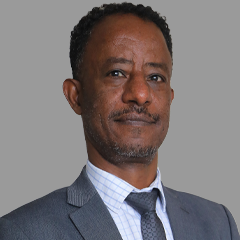
Gobeze Dessalegn
Director, HST Learning Solutions
As Ethiopia accelerates reforms aimed at strengthening economic governance and institutional capacity, the establishment of a structured Finance Professionals Qualification Framework represents a pivotal development for the country’s financial and accounting landscape. Central to these reforms is the launch of the Ethiopian Institute of Certified Public Accountants (ETiCPA), a statutory body created under Proclamation No. 1372/2025 to regulate, develop, and promote the accountancy profession nationwide. The formal inauguration of ETiCPA in December 2025 marked a milestone in professionalizing accounting and finance careers in Ethiopia, with implications for transparency, accountability, and economic development.
Within this broader framework, the Accounting Technician Qualification (ATQ) has emerged as a cornerstone of the government’s strategy to build a competent finance workforce. In mid-2025, the Accounting and Auditing Board of Ethiopia (AABE), in collaboration with the Ministry of Finance, the World Bank Group and other development partners, convened a consultation forum to refine the ATQ syllabus and implementation roadmap. This forum underscored the importance of aligning the qualification with both international best practices and Ethiopia’s public sector accounting, taxation and legal requirements, laying the foundation for a credential that bridges education and practice.
The Role of Accounting Technicians in an Economy
At the heart of Ethiopia’s socioeconomic transformation is the recognition that effective financial management at all levels of the economy depends on skilled practitioners. Accounting technicians perform essential functions: they maintain accurate bookkeeping, prepare timely and reliable financial information, support budgeting and cash management, and help ensure compliance with regulatory and tax obligations. In both private enterprises and public institutions, these professionals underpin sound decision-making and foster trust in financial reporting. Certified accounting technicians not only alleviate workforce shortages in critical finance roles but also serve as gateways for individuals from diverse educational backgrounds to enter the broader finance profession.
By embedding competencies that reflect real-world needs, the ATQ equips candidates with practical skills ranging from foundational accounting principles to increasingly sophisticated practices that directly contribute to organizational efficiency and accountability. This focus on applied skills is especially important in Ethiopia’s evolving economic context, where enterprises and public agencies alike are strengthening internal controls and adopting more rigorous reporting standards to attract investment and manage public funds responsibly.
Academic vs. Professional Qualifications: Complementary but Distinct
A significant theme in the dialogue around Ethiopia’s new qualification framework is the distinction between academic credentials and professional qualifications. University degrees in accounting, finance, or related disciplines provide theoretical grounding and critical analytical skills. They fulfill an important role in fostering broad intellectual development and often serve as prerequisites for advanced study. However, academic programs may not always focus intensively on the day-to-day competencies needed for immediate practice in finance roles.
Professional qualifications such as the ATQ, in contrast, are designed expressly to validate practical competence in performing finance-related tasks to defined standards. They often require candidates to demonstrate capability through structured examinations, supervised work experience, and adherence to ethical codes. For employers, professional credentials signal that a candidate possesses not just theoretical knowledge but also the applied skills and ethical understanding required in professional settings. This distinction can be especially meaningful in contexts where employers seek assurance that new hires are ready to contribute effectively from the outset.
In Ethiopia, this complementary dynamic is recognized: while academic pathways continue to produce graduates with broad subject-matter insight, professional qualifications like the ATQ and ultimately the Certified Public Accountant designation provide practical accreditation that enhances employability and career progression. Indeed, the ATQ is positioned as both a terminal qualification for those entering the workforce and a steppingstone toward higher professional certifications for those pursuing advanced career paths.
Ethiopian Context: Building Standards with Global and Local Relevance
Ethiopia’s push to strengthen professional qualifications must be understood in its specific economic and institutional context. As the country pursues structural transformation, there is heightened emphasis on good governance, improved public financial management, and corporate transparency. A credible and well-regulated accountancy profession supports these goals by enhancing the quality of financial reporting and auditing across sectors. The establishment of ETiCPA and the development of the ATQ reflect policy intent to standardize qualifications and align practice with internationally recognized frameworks, while also addressing local needs such as public sector aacounting and compliance with domestic taxes and other regulations.
Training and capacity-building initiatives for educators and professional trainers, including Training of Trainers (ToT) programs supported by international partners, further highlight the commitment to raising the quality of accounting education in Ethiopia. These efforts aim not only to equip individuals but to strengthen the system that prepares future generations of finance professionals capable of navigating the complexities of both local and global economic environments.
As Ethiopia implements its new finance professionals qualification regime, the growing emphasis on professional standards, clear career progression pathways, and alignment with global benchmarks promises to elevate the status of accounting and finance roles. For students, practitioners, and employers alike, the emerging framework offers a compelling vision: one in which qualified accounting technicians and finance professionals play a central role in supporting economic resilience, transparency, and sustainable development.
Conclusion
As Ethiopia lays the institutional foundations for a modern and resilient economy, the emergence of nationally recognized finance professionals’ qualifications marks a decisive step forward. By clearly defining the roles of accounting technicians and professional accountants, and by distinguishing academic learning from professional competence, the country is building a finance workforce that is both skilled and fit for purpose. In doing so, Ethiopia is not only creating new career pathways for its young population, but also strengthening the systems of accountability and financial discipline upon which sustainable economic growth depends. The success of these qualifications will ultimately be measured by their impact on everyday financial practice across businesses, public institutions, and the wider economy where competent finance professionals quietly but critically shape the nation’s future.
Related Insights
How can we help?
Get in touch with us
HST works with clients to solve business growth, operational, people, financial, tax, governance, risk, learning and compliance challenges with locally relevant solutions.
Contact
Addis Ababa: Ethio-China Friendship Ave,
Mina Building 4th and 5th Floor
Addis Ababa Tel: +251 115 52 76 66/67
Adama: Gurmu Woreda around Mebrat Hayle,
Oromia Bank building 2nd Floor
Adama Tel: +251915156522/+251911866404
info@hst-et.com
P.O. Box 25701